By Fake Review Detector
Yes, GOAT is legit. It is a real sneaker and fashion resale marketplace, founded in Los Angeles in 2015, that authenticates items before they reach you. But legit does not mean risk-free: refunds usually come as GOAT Credit, returns can cost up to 15%, and in December 2024 the US Federal Trade Commission ordered GOAT to pay $2,013,527 in refunds over late shipping and buyer-protection failures. Read the fine print before you pay.
Is GOAT Legit? Sneaker Resale Check
What GOAT Is and How It Works
GOAT is an online marketplace for sneakers, streetwear and luxury goods, founded in July 2015 by Eddy Lu and Daishin Sugano in Los Angeles. The idea came from Sugano's own bad experience: he bought a pair of counterfeit sneakers online and could not get his money back. That origin story shaped the whole platform — authentication first, everything else second.
GOAT merged with Flight Club in February 2018, giving it physical stores in New York City, Los Angeles and Miami as well as the app. Today GOAT Group also runs Grailed and alias. The company was valued at $3.7 billion in 2021, and GOAT says its community now passes 60 million members across 170 countries.
GOAT is a marketplace, so most listings come from independent sellers who set their own prices. The difference from an open classifieds site is the middle step: the seller never ships directly to you. Every resale order goes through GOAT first. That single design choice is what makes GOAT safer than buying the same pair from a stranger on social media — and it is also where most of the delays and costs come from.
How GOAT Authenticates Sneakers
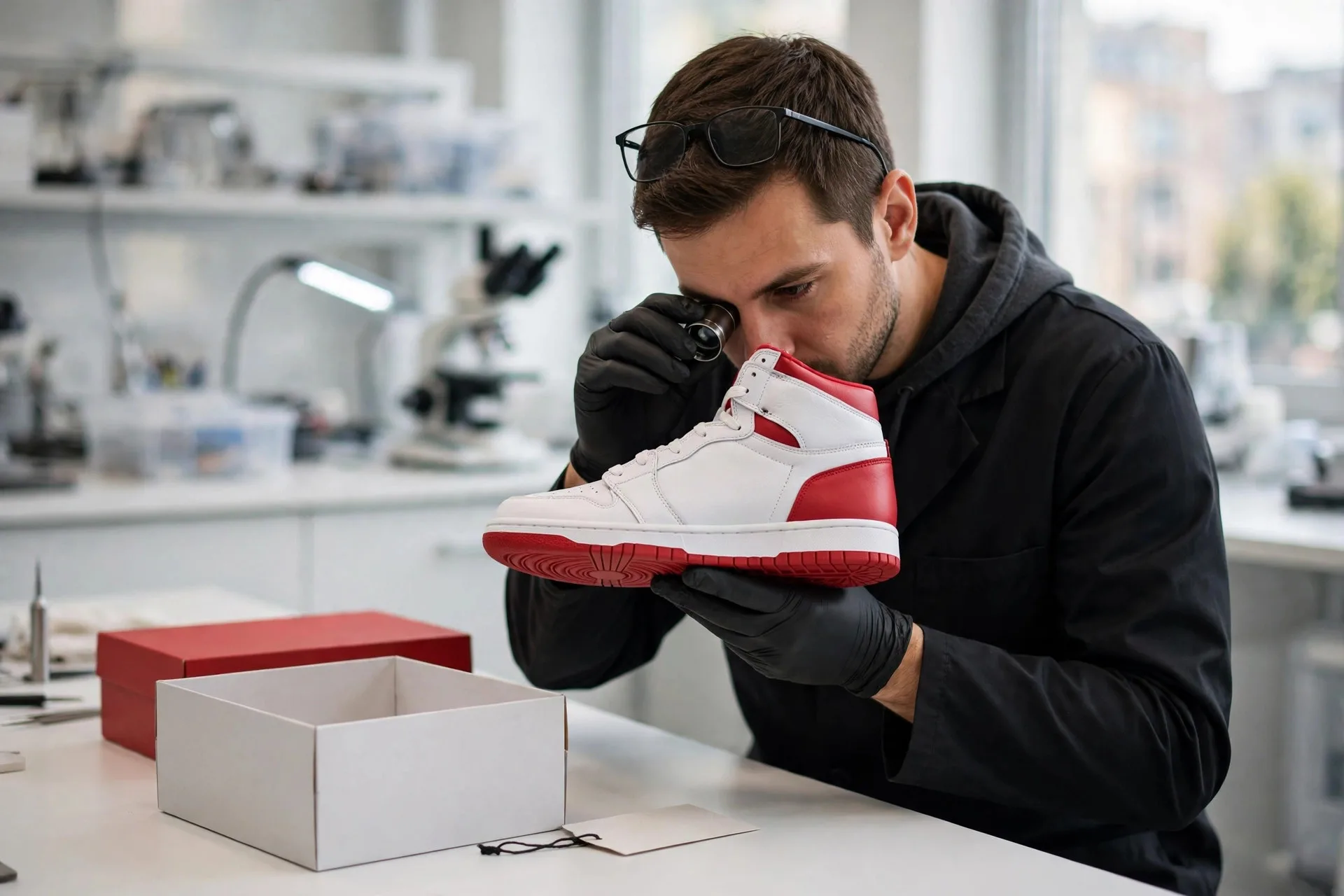
GOAT's system is called ship-to-verify. When you buy a standard resale item, the seller has a few business days to ship it to a GOAT authentication centre. Specialists there check it, and only once it passes is it sent on to you. GOAT says items are verified using a mix of digital authentication, in-hand verification and machine learning, backed by hundreds of thousands of product data points the company has logged.
In practice the check covers the things replica factories most often get wrong: stitching, leather grain, box labels, size-tag fonts, midsole texture and glue marks. Machine-learning cameras scan macro details such as heel-tab spacing. If the pair fails, GOAT cancels the order and refunds you — it does not ship the pair to you and hope you do not notice.
One detail worth knowing before you order: GOAT states plainly that while every product is verified by at least one of these methods, some products are verified without a physical examination of the item. Digital-only verification is real, and it is weaker than an in-hand check. It does not make GOAT a scam — but it does mean "authenticated" is not a guarantee that a human held your exact pair.
Standard ship-to-verify orders typically take 7 to 10 business days to reach you in the contiguous United States, and can stretch longer. Instant Ship items are different: they are pre-authenticated pairs already stored at GOAT facilities, and they usually arrive in 2 to 4 business days. Standard shipping costs $14.95 per order in the US.
What Buyer Protection Actually Covers
GOAT's Buyer Protection Policy covers you if the item you receive is inauthentic, the wrong item, not as described or pictured — for example scuffs that were not shown in the listing — or missing a key feature, such as sneakers without insoles.
The limit that matters most is time. You have 30 days from delivery to contact GOAT through GOAT Assist on the Orders page in the app, or by raising a support request. Miss that window and the protection is gone. If your claim is approved, GOAT says the refund comes as GOAT Credit for your total purchase, unless you ask for a refund to your original payment method when you contact support — so ask explicitly if you want cash back, not credit.
Three exclusions catch buyers out. First, wear-related issues are not covered, so do not wear the pair before you have checked it carefully. Second, freight-forwarder orders are excluded entirely — if you are overseas and using a forwarding service, you have no Buyer Protection at all. Third, if GOAT asks you to return the item, you must ship it back within 3 business days of receiving the return label.
Your move the day the box arrives: inspect the shoes, the box and the labels before wearing them, photograph anything that looks off, and raise it in GOAT Assist immediately. A claim raised on day 3 is a different conversation from one raised on day 29.
Returns: What They Really Cost
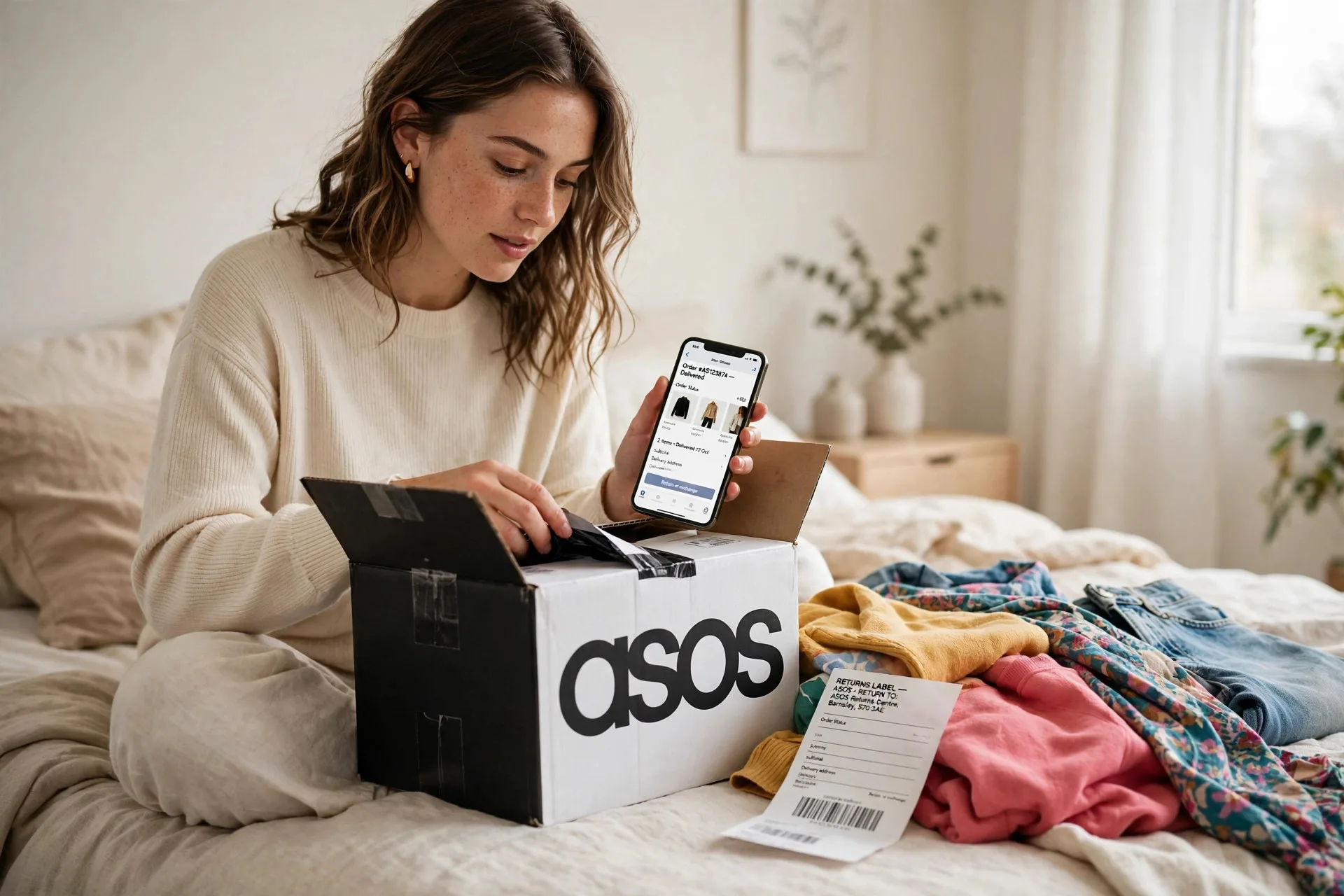
GOAT's returns policy gives you 30 days from receipt to request a return, but only for eligible new items. Used items are final sale, and many individual-seller listings are marked Final Sale too — check the listing before you buy, not after.
For buyers in the US, GOAT says a return processing fee of up to 15% of the item's price may apply, and you pay the return shipping. Refunds usually come as GOAT Credit, and GOAT says credit issued as a refund expires one year after it is issued in most states. That combination — a fee, your own return postage, and store credit instead of cash — is the single biggest complaint in buyer reviews, and it is all written in GOAT's own policy pages.
For shoppers in Europe, the practical picture is similar: GOAT's own returns terms govern the process, and the 30-day window runs from receipt. EU distance-selling rules give you a 14-day cooling-off period when you buy from a trader, but resale marketplaces and their seller-of-record arrangements make that right harder to exercise in practice — check which GOAT entity is named as the seller on your order before you rely on it. In the UK, the Consumer Contracts Regulations give the same 14-day cooling-off period for distance purchases from a trader.
The FTC Case: $2 Million in Refunds
The strongest evidence that GOAT is a real company with real problems comes from the US Federal Trade Commission. On 2 December 2024 the FTC announced a court order requiring GOAT (legal name 1661, Inc.) to pay $2,013,527 in refunds for violating the FTC's Mail Order Rule and failing to honour its own Buyer Protection policy.
The FTC alleged that GOAT shipped 37% of its "Instant" orders later than promised and delivered more than 16% of "Next Day" orders two days or more after purchase — while charging $14.50 to $25 extra for that expedited shipping. When orders shipped late, the FTC said GOAT failed to notify customers and give them the option to cancel and get a prompt refund, as the Mail Order Rule requires. The FTC also alleged GOAT promoted Buyer Protection but never put a system in place to honour it.
The order also barred GOAT from misrepresenting its shipping timelines, refund policies or buyer protections. GOAT said it settled to avoid costly litigation and pointed to its own data showing 99.84% of products shipped or received on time in the reviewed sample.
The story did not end in 2024. Under the settlement, GOAT's 2025 refund round returned more than $736,000 to affected customers — but some eligible people were missed. On 6 October 2026 the FTC began sending 6,205 further payments totalling more than $100,000 to customers who had not yet received a refund. If you bought expedited shipping from GOAT between 2020 and 2024 and it arrived late, the FTC's GOAT refunds page is the place to check eligibility — not an email or text claiming to be from GOAT or the FTC.
What Real Buyers Say
As of October 2026, GOAT holds a 3.9 out of 5 score on Trustpilot across about 61,000 reviews, with 67% of reviewers giving five stars and 20% giving one star. That split tells the story: most buyers get authentic shoes and are happy; a large minority hit shipping delays, refunds paid as store credit, or slow customer support and leave one-star reviews.
The Better Business Bureau paints a harsher picture, with a 1.11 out of 5 rating — but BBB scores skew heavily toward complaints, so read it as a warning about what goes wrong rather than as the average experience. The pattern across both is consistent: authentication is rarely the complaint; money and time are.
Treat any single review as one data point, not proof of how every order goes. The useful signal is the shape of the complaints — late shipping, credit-only refunds, slow support — because those are the risks you can plan around. The same rule applies to seller reviews on any marketplace: if a seller's feedback looks staged, paste the review text into our fake review checker and check it before you pay.
GOAT vs StockX: The Quick Comparison
GOAT and StockX are the two big authenticated sneaker marketplaces, and they solve the same problem differently. StockX runs a bid-and-ask stock-market model with seven authentication centres worldwide and generally no returns — once an item passes inspection, the sale is final. GOAT runs a more traditional marketplace model with listing prices, and it does offer returns on eligible new items within 30 days, with the fees described above.
GOAT's two-step verification — digital pre-screening of seller photos against a product database, then physical inspection at its facilities — is widely regarded as thorough. StockX introduced a Verified Seller programme in 2025 that lets a small number of pre-vetted sellers ship directly to buyers, bypassing its authentication centres; GOAT still routes resale items through its own facilities.
For buyers, the practical difference is this: GOAT gives you a return window StockX does not, but you pay for it in fees and store credit. StockX is simpler and final. Neither platform is immune to the occasional fake slipping through, and both have faced regulatory pressure — StockX settled the Nike counterfeit case privately in August 2025 after a court found 37 counterfeit pairs in 2025. Read our full StockX check at fakereviewdetector.org/blog/is-stockx-legit-authentication-explained-2026 before choosing between them.
How to Buy Safely on GOAT: 7 Checks Before You Pay
1. Buy standard, not rushed, when you can. Instant Ship is faster, but the FTC case showed it was the shipping tier most often delivered late. If the date matters — a birthday, a trip — order weeks early or do not order at all.
2. Read the listing like a contract. "New" and "used" mean different things on GOAT, and used items are final sale. Check the condition grade, the photos and whether the listing says Final Sale before you tap buy.
3. Compare the price against the market, not against retail. A pair listed far below every other seller for the same size is the oldest red flag in resale. Check the same shoe on StockX and eBay before you commit. If the seller's own reviews look too good to be true, paste the review text into our fake review checker before you trust them.
4. Inspect on arrival, before wearing. Check the box label, size tag, stitching and sole against a verified pair, photograph anything odd, and raise it in GOAT Assist the same day. Wear-related issues are not covered.
5. Know the 30-day clock. Buyer Protection ends 30 days after delivery. Put the date in your calendar the day the shoes arrive.
6. Ask for cash back, not credit. If a claim is approved, GOAT defaults to GOAT Credit. Ask for a refund to your original payment method when you contact support.
7. Never use a freight forwarder. Orders shipped through a forwarding service have no Buyer Protection at all. If you are buying from Europe and the pair must cross borders, buy from a seller or platform that ships to you directly.
Selling on GOAT? The Fees to Know
If you are on the other side of the trade, GOAT charges sellers a standard commission of 9.5% plus a $5 US label fee, with higher commission for lower seller ratings, and a 2.9% fee on most cash-outs. That is competitive with StockX, but the rating-linked commission means one bad dispute can raise what you pay on the next sale. Ship fast — sellers get a few business days to send the item to GOAT — and photograph the pair honestly, because a failed authentication cancels the sale.
Frequently Asked Questions
Is GOAT legit or a scam?
GOAT is legit. It is a real marketplace founded in 2015 that authenticates items before shipping them to buyers, and it is not a scam. It is also a company that settled a Federal Trade Commission case in December 2024 over late shipping and refund practices, so legit does not mean flawless.
Does GOAT authenticate every pair?
GOAT says every product is verified by at least one of its methods — digital authentication, in-hand verification or machine learning. Some products are verified without a physical examination, so "authenticated" does not always mean a human held your exact pair.
Can I return shoes to GOAT?
Yes, for eligible new items within 30 days of receipt — but a return processing fee of up to 15% may apply in the US, you pay return shipping, and refunds usually come as GOAT Credit. Used items and Final Sale listings cannot be returned.
What happens if GOAT sends me a fake?
Contact GOAT through GOAT Assist within 30 days of delivery. If the claim is approved, GOAT says it will give you the same item as described or a full refund. Inspect the shoes the day they arrive and do not wear them before checking.
Is GOAT or StockX better?
It depends what you value. GOAT offers a 30-day return window on eligible new items and a traditional marketplace with listing prices; StockX is generally final sale with a bid-and-ask model. Both authenticate items, and neither is immune to the occasional error. Compare the same shoe on both before you buy.
The Bottom Line
GOAT is a legitimate way to buy sneakers you cannot get at retail, and its ship-to-verify system genuinely blocks most fakes before they reach you. The risks are not about authenticity — they are about money and time: credit-only refunds, a return fee of up to 15%, and shipping that has, in the past, arrived later than promised. If you buy, buy with the 30-day clock in mind, inspect the pair the day it lands, and never wear it before you have checked it.
Before you buy from any resale seller, run the same checks in our guide at fakereviewdetector.org/blog/how-to-verify-a-seller-before-you-pay-2026 — and if a seller's reviews look too good to be true, paste the review text into our fake review checker at fakereviewdetector.org/fake-review-checker before you pay.