By Fake Review Detector
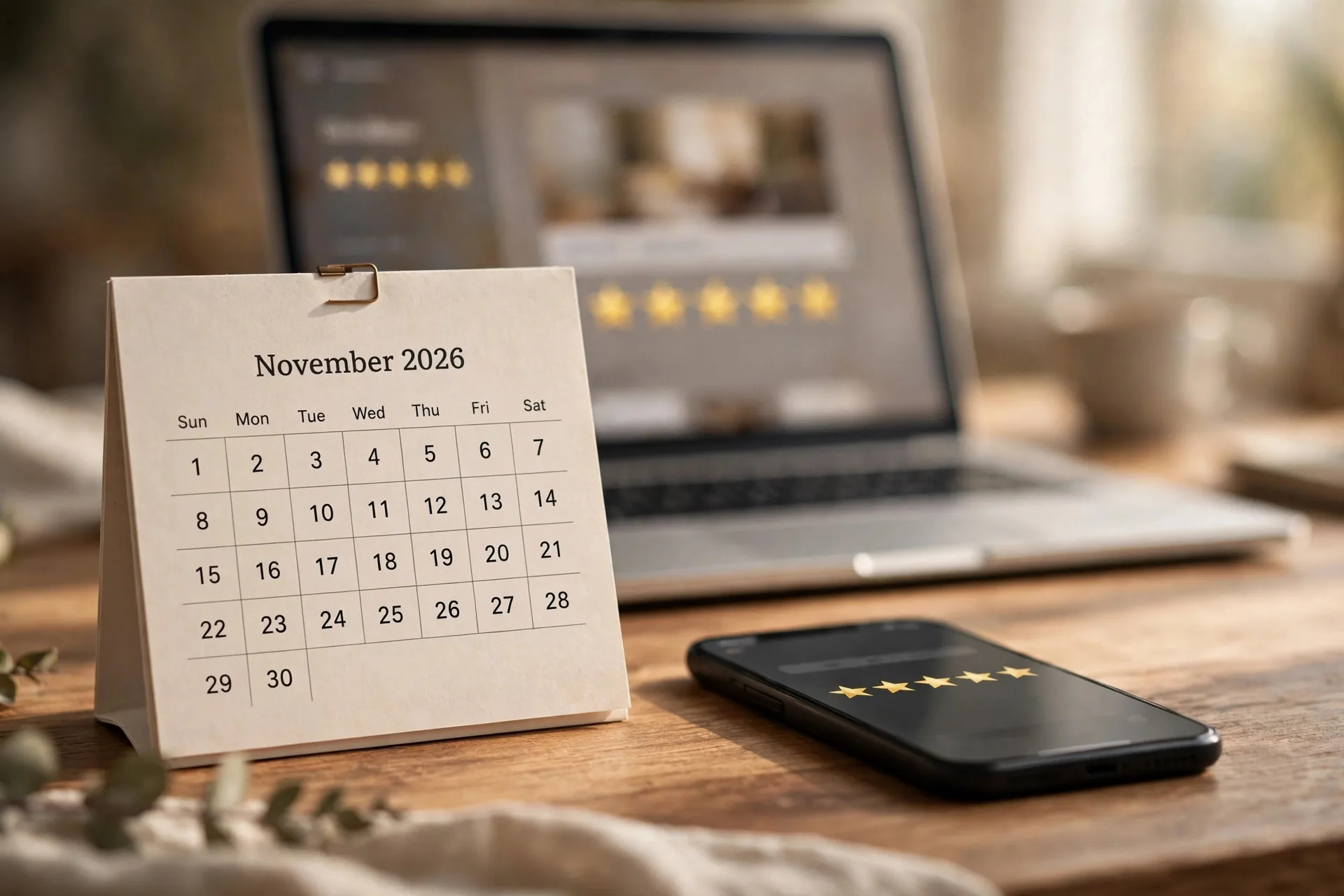
November 2026 was the month review trust stopped being a background issue and became the story. The European Commission proposed a law that would force shops to prove their reviews are genuine, a new industry report found most shoppers in the US and UK now abandon purchases over fake-review fears, the FTC's fake-review cases returned to the headlines, and Black Friday warnings peaked just as the biggest shopping weekend of the year arrived. Here is what actually changed, what it means for you, and how to shop safely through the rest of the season.
November 2026 at a Glance: The Month Review Trust Moved
If you only remember five things from this month, make them these. On 11 November, the European Commission published its proposal for a Digital Fairness Act that would require traders to disclose how they check that reviews are genuine. On 9 November, the Coalition for Trusted Reviews released a white paper based on polling 6,000 consumers in the UK, the US and Italy, finding that nearly three-quarters of shoppers in the US and UK have decided against a purchase because of concerns about fake or misleading reviews. In the US, analysis of the FTC's October enforcement actions against GovAssist and Digital Forensics circulated through November, and the passport-services lawsuit was reported again on 19 November. In the UK, the Competition and Markets Authority's 2026 investigations into five businesses over fake-review practices continued to set the tone for enforcement. And Black Friday falls on 27 November, with Cyber Monday on 30 November, making this the highest-risk shopping week of the year for fake deals and fake stores. None of these are rumours or forecasts: every item below is dated and sourced.
The EU's Digital Fairness Act: Shops Must Prove Their Reviews Are Real
The biggest single event of the month came on 11 November 2026, when the European Commission published its proposal for a Digital Fairness Act, reference COM(2026) 1100. The proposal would replace the Unfair Commercial Practices Directive with a regulation that applies directly in every member state, and it goes further on reviews than anything before it.
Under the proposal, traders must disclose how they check that reviews are genuine, and they must disclose the main parameters that determine how products are ranked. Fake scarcity claims, such as persistently showing that a product is almost sold out to pressure a purchase, would be banned outright under a blacklist of 62 practices that are unfair in all circumstances. The proposal also covers dark patterns more broadly, influencer marketing disclosure, restrictions on personalised advertising and pricing that target minors, and easier cancellation of digital contracts and subscriptions, including an end to unwanted automatic renewals after free trials. The Commission says the changes could save EU consumers up to €13.7 billion a year.
Two things shoppers should understand. First, this is a proposal, not law: it now goes to the European Parliament and the Council, and law firms tracking it estimate it would apply around 2028 to 2029. Second, it builds on rules already in force. Since 28 May 2022, the Omnibus Directive has banned fake reviews in the EU, and since 17 February 2024 the Digital Services Act has required marketplaces to check trader identities and act on illegal content. The Digital Fairness Act would add the missing piece: proof. A shop would not just have to avoid fake reviews, it would have to show shoppers how it verifies the real ones. For more on the rules already protecting you, see our guide to the EU Digital Services Act: https://fakereviewdetector.org/blog/eu-digital-services-act-what-it-means-for-shoppers-2026
Shoppers Are Walking Away: The Coalition for Trusted Reviews Report
On 9 November 2026, the Coalition for Trusted Reviews — formed in 2023 by Amazon, Booking.com, Tripadvisor and others to stop fake reviews at their source — released a white paper based on new polling of 6,000 consumers across the UK, the United States and Italy. Its headline finding is blunt: nearly three-quarters of consumers in the US and UK have decided against buying a product or service because of concerns about fake or misleading reviews.
The report also captures how AI has changed the problem. Half of US consumers and 70% of UK consumers say they would trust a review less if they knew AI had been used to write or assist with it. At the same time, the line between AI help and AI fraud is getting harder to draw. Tripadvisor removed more than 214,000 reviews in 2024 that indicated AI-generated text, yet its examination of the underlying data found those reviews did not show the usual patterns of coordinated fraud — genuine consumers may simply have used AI to write or translate their reviews. Platforms now have to separate legitimate AI assistance from AI-enabled fraud, and that distinction is exactly what makes this month's report important.
The coalition also notes that third-party review brokers, which reuse identities, text, tactics and network structures across platforms, remain a major source of manipulation, and that members are taking legal action. Amazon and the Better Business Bureau filed a joint lawsuit against the operators of Skitsolutionbd.com, alleging it sells fake reviews and fraudulent content targeting both platforms. The message for shoppers is practical: when a product's reviews look polished but oddly similar, or when a seller's entire catalogue carries the same style of praise, that is a signal worth checking, not ignoring. Copy the suspicious review text and paste the review text into our fake review checker at https://fakereviewdetector.org/fake-review-checker before you trust it.
The FTC's Fake-Review Cases Reach the News Again
November brought fresh attention to the US Federal Trade Commission's enforcement of its rule on consumer reviews and testimonials, 16 CFR Part 465, which took effect on 21 October 2024 and bans fake reviews and testimonials, including AI-generated ones, with civil penalties of up to $53,088 per violation — the 2025 figure, which the FTC kept for 2026 rather than adjusting it again.
A November 2026 analysis by law firm DLA Piper reviewed the FTC's two October enforcement actions. On 22 October 2026, the FTC announced a lawsuit against GovAssist LLC and others over an alleged government-impersonation scheme aimed at people seeking passport services, including allegations that the defendants posted fake positive reviews to hide negative ones and appear legitimate. That case was reported again in the news on 19 November 2026. On 13 October 2026, the FTC announced a federal court action against Digital Forensics Corporation LLC and others, alleging consumers were misled into paying at least $60 million for supposed sextortion-assistance services that were not performed; the complaint includes a section titled "Defendants Unlawfully Suppress Negative Reviews and Disseminate Fake Positive Reviews" and three counts involving the allegedly fake positive reviews.
These cases sit on top of a year of enforcement. The FTC sent warning letters to ten companies in December 2025, and in May 2026 the Department of Justice, acting for the FTC, and the Illinois Attorney General sued Premium Home Service over alleged fake business listings and fake five-star reviews posted by employees, relatives and SEO firms. An earlier case, TruHeight, ended with a $4 million judgment, partially suspended on payment of $750,000. The pattern is now clear: the rule is no longer a warning on paper. It is being used in court, and fake reviews are treated as part of the fraud, not a side issue. For the full breakdown of what the rule bans, see our guide: https://fakereviewdetector.org/blog/ftc-fake-review-rule-what-it-bans-2026
Black Friday 2026: The Fake-Deal Peak Is Here
Black Friday falls on Friday 27 November 2026, with Cyber Monday on Monday 30 November, and this month's warnings make one thing clear: the biggest shopping weekend of the year is also the biggest fake-review and fake-store weekend. Adobe forecasts that US online sales will reach $275.1 billion from 1 November to 31 December 2026, up 6.7% from the year before, with $15.1 billion spent on Cyber Monday alone.
The FTC's 2026 data spotlight shows why caution matters. Nearly 30% of people who reported losing money to a scam in 2025 said it started on social media, with reported losses of $2.1 billion, and shopping scams were the most reported type. More than 40% of people who lost money to a scam on social media said it started when they ordered something they saw in an ad. Security researchers also warn that scammers now use AI tools to build fake stores faster: Netcraft reported early signs of AI-generated text, images and entire fraudulent websites in November 2025, and detections of fake store domains rose 110% from August to October 2024.
The same tricks appear every year, and they are all live right now. A crossed-out "was" price that was never really charged. A model number you cannot find anywhere else, built only for the sale. A social-media ad for a brand-name item at half price that leads to a copycat store. A text about a package problem with a link to a fake page. And a seller who insists on gift cards, wire transfers, crypto or a payment-app transfer instead of a credit card. Our detailed guide to fake discounts explains how to check a "was" price before you believe it: https://fakereviewdetector.org/blog/fake-discounts-how-was-99-now-29-lies-2026 — and our Black Friday guide covers the season's scams in full: https://fakereviewdetector.org/blog/black-friday-2026-fake-reviews-scam-deals-guide
The UK's Next Sweep: What the CMA Is Doing Now
In the UK, the Competition and Markets Authority opened investigations into five businesses in March 2026, including one over discounts offered for five-star reviews and one over staff being asked to write positive reviews. That work continued through the year, and it sits alongside the undertakings the CMA has already secured: Google gave undertakings in January 2025, and Amazon gave undertakings in June 2026, committing to enhanced detection systems and tough sanctions for businesses using fake reviews or catalogue abuse — where sellers hijack the reviews of a well-performing product and attach them to an entirely different product — including bans from selling, and bans on users who post fake reviews.
The legal backdrop changed in April 2025, when fake-review practices became banned practices under the Digital Markets, Competition and Consumers Act 2024, with fines of up to 10% of worldwide turnover. The CMA estimates that as much as £23 billion of UK consumer spending a year is potentially influenced by online reviews, and around 90% of consumers use reviews when making purchasing decisions. The regulator has said it is now actively sweeping review platforms as it considers action under the new consumer regime. For UK shoppers, the practical effect is simple: a business that buys reviews or hides negative ones is breaking the law, not just bending the rules, and the platforms are now expected to catch it.
What This Month Means for You as a Shopper
November's news changes the rules, but it does not change what you should do before you pay. Use this checklist through Black Friday, Cyber Monday and the rest of the holiday season:
1. Read the reviews, not just the stars. A 4.8-star average built from one-line, same-day, same-phrasing reviews is weaker evidence than a 4.3-star average with detailed, dated, mixed reviews.
2. Check the "was" price. Search the exact model at two other stores and look up its price history before you believe a 50% discount.
3. Verify the seller before you pay. Search the store's name plus "scam" or "reviews", check for a real contact page and return policy, and type the address yourself instead of clicking an ad. Our website checker can help: https://fakereviewdetector.org/website-checker
4. Test suspicious review text. If a review reads like an advert, paste the review text into our fake review checker at https://fakereviewdetector.org/fake-review-checker and see what it finds.
5. Pay by credit card. A seller who insists on gift cards, wire transfers, crypto or "friends and family" payments is removing your protection on purpose. In the UK, Section 75 covers credit-card purchases from £100 to £30,000.
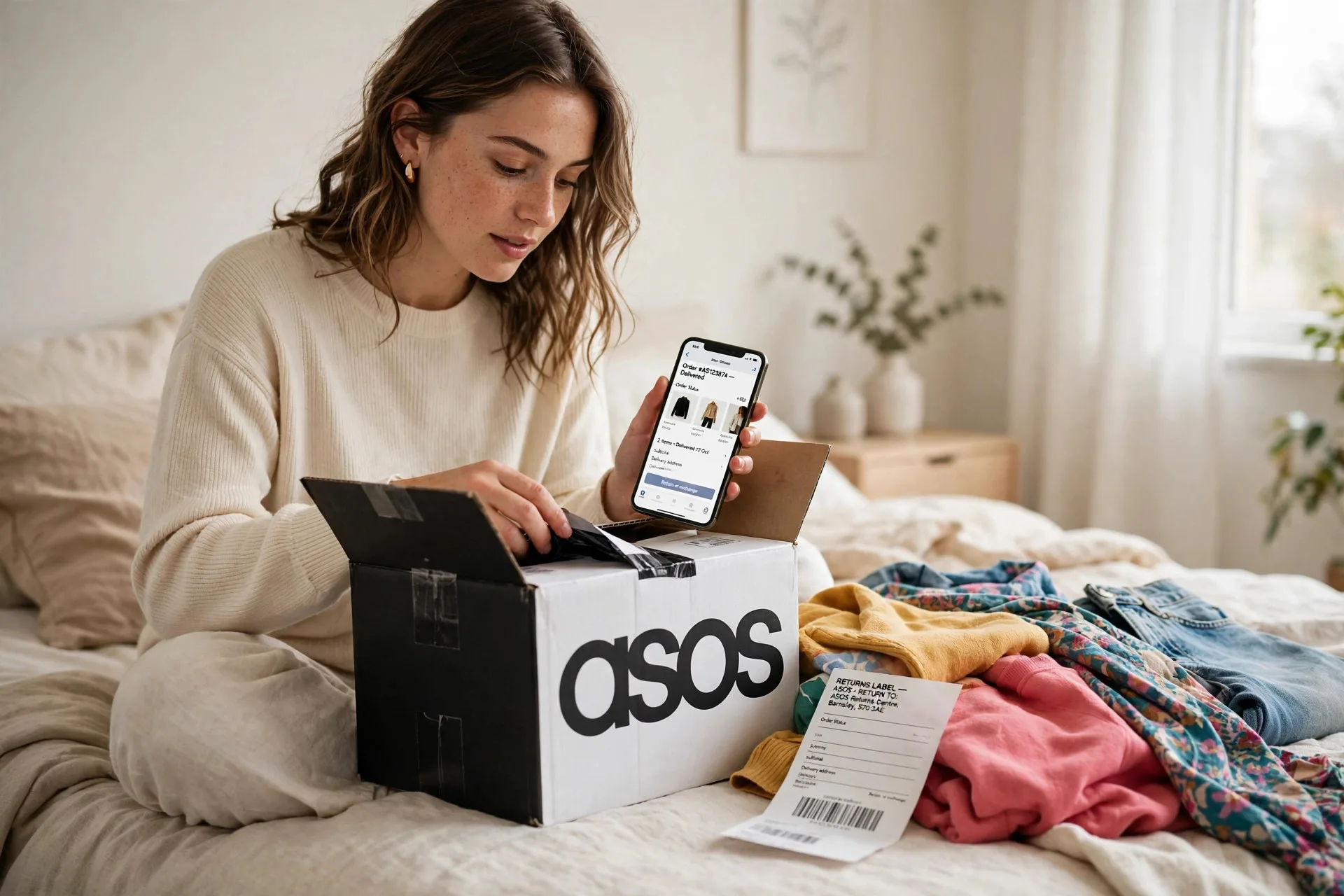
6. Never click a delivery text link. Check the order on the store's own site or app instead.
7. Report what you find. In the US, report fake reviews and review fraud at ReportFraud.ftc.gov. In the UK, report to the CMA or use reportfraud.police.uk.
Frequently Asked Questions
What is a review trust roundup?
A review trust roundup is a monthly summary of the real events that changed how much shoppers can trust online reviews: new laws, regulator fines and investigations, platform crackdowns, and new research. This one covers November 2026, with every event dated and sourced.
What changed about fake reviews in November 2026?
Three things mattered most. The European Commission proposed the Digital Fairness Act on 11 November 2026, which would require traders to disclose how they verify reviews. The Coalition for Trusted Reviews published a white paper on 9 November 2026 showing most US and UK shoppers now abandon purchases over fake-review concerns. And the FTC's fake-review enforcement cases stayed in the news, with the GovAssist lawsuit reported again on 19 November 2026.
Is the EU Digital Fairness Act law yet?
No. It is a proposal published on 11 November 2026 as COM(2026) 1100, and it now goes to the European Parliament and the Council. Law firms tracking it estimate it would apply around 2028 to 2029. The rules already in force — the Omnibus Directive's fake-review ban since 28 May 2022 and the Digital Services Act since 17 February 2024 — still protect you today.
Are AI-written reviews illegal?
In the US, yes, when they misrepresent a real experience: the FTC's rule on consumer reviews and testimonials, 16 CFR Part 465, covers AI-generated fake reviews and allows civil penalties of up to $53,088 per violation. In the UK, fake reviews are a banned practice under the Digital Markets, Competition and Consumers Act 2024. In the EU, the Omnibus Directive has banned them since 28 May 2022. The tricky part is AI assistance: a genuine customer using AI to write or translate a real review is a different case from a fake review invented by AI, and platforms are still learning to tell them apart.
How can I check a review before Black Friday?
Read past the star rating and look for detail, dates and mixed opinions. Then copy the suspicious review text and paste the review text into our fake review checker at https://fakereviewdetector.org/fake-review-checker. Also check the seller with our website checker at https://fakereviewdetector.org/website-checker, compare the price at two other stores, and pay by credit card.
November 2026 proved that review trust is now a legal issue, a platform issue and a shopping issue at the same time. The EU is writing a law that would force shops to prove their reviews are real. Shoppers are already voting with their wallets. Regulators in the US and the UK are suing and fining. Your next step is simple: before your next Black Friday purchase, run the review text through our fake review checker and the store through our website checker — it takes less than a minute, and this month's news shows exactly why it is worth it.
Sources: European Commission, "Making your online experience fairer", 11 November 2026; Cooley, "What Could the EU's Digital Fairness Act Mean for Your Business?", 13 November 2026; Customer Experience Dive, "Fake, deceptive reviews are altering shopping journeys", 9 November 2026; DLA Piper, "FTC's actions against fake reviews in GovAssist and Digital Forensics", November 2026; Wisevoter, "FTC Sues Passport Services Firms Over Deceptive Ads", 19 November 2026; Guardio, "Black Friday and Cyber Monday scams: shop safely in 2026", updated 12 November 2026; Hypergl, "Online Reputation Management for Businesses (2026 Guide)", 15 November 2026. Search volumes unverified.