
Basic Details
Summarize what happened, who was involved, and what they offered or claimed.
Guides & Resources
A Complete Guide to Documenting, Organizing & Presenting Scam Evidence
Learn what to include and how to organize a clear report for a dispute, recovery request, or official scam report.
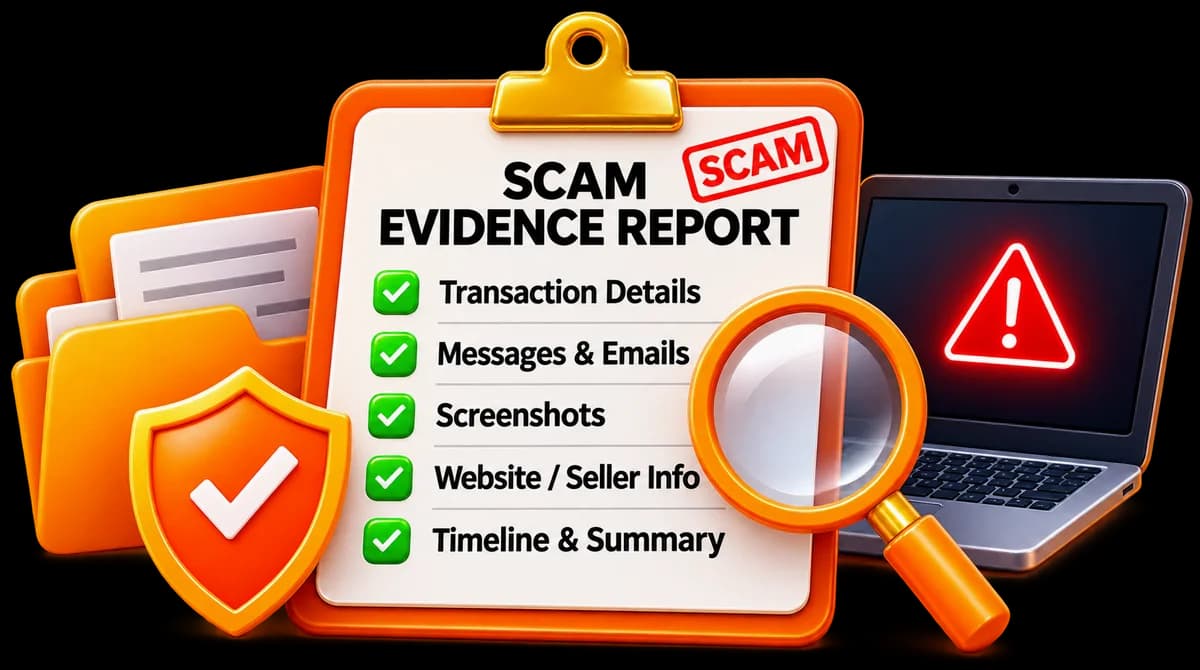
A scam evidence report is an organized record of a suspected scam. It brings together a factual summary, payment details, messages, and supporting documents so the person reviewing the report can see what happened and when.
Start with the facts you can support with your records.
Summarize what happened, who was involved, and what they offered or claimed.
Record when contact began, when you paid, and when you noticed a problem.
List the amount, currency, method, and transaction reference if available.
Keep relevant emails, messages, and chat records with timestamps.
Save screenshots of listings, ads, offers, profiles, and relevant claims.
Record the site URL, public username, social profile, or app involved.
Follow these four steps to put your report together.
Gather messages, receipts, screenshots, links, and reference numbers.
Put events in date order and attach each record to the relevant event.
Explain what happened, what was promised, and what you received.
Check details against your records and keep a copy of what you share.
Use these headings to structure your report.
Choose the official channel for the action you’re taking.
Requirements vary by jurisdiction and by the bank, platform, or agency receiving it. Follow the recipient’s instructions for its form and supporting documents.
Reuse the same factual timeline and prepare a separate copy for each recipient. Include only the details and attachments that recipient needs.
Include dated messages, payment receipts, transaction references, and screenshots that support specific events in your timeline. Keep the originals for your records.
Share only what the recipient requires, using its verified submission channel. Redact unnecessary personal details from shared copies and keep credentials out of the report.
A report helps a provider review your claim. Refund and reversal decisions depend on your payment method, timing, evidence, and the provider’s rules.
Put the timeline and supporting records together so the recipient can see what happened and which evidence supports each event.