By Fake Review Detector
Yes, Poshmark is a legitimate marketplace. It has operated since 2011, listed on the Nasdaq in 2021, and has been owned by South Korean internet company Naver since a $1.2 billion acquisition closed in January 2023. But "legitimate company" is not the same as "risk-free shopping": buyers get only 72 hours after delivery to report a problem, there are no returns for fit or change of mind, and Trustpilot rates poshmark.com just 1.2 out of 5. Poshmark is safe when you pay inside the app, inspect fast, and vet the seller first.
What Poshmark Is and How It Works
Poshmark is a social marketplace for new and secondhand fashion, accessories, home goods and more. It was founded in 2011 and is headquartered in Redwood City, California. The platform lists more than 200 million items for sale, and its Google Play listing (updated 1 May 2026) says over 70 million people across the United States and Canada use it.
The buying flow is simple, and that simplicity is the point. You find a listing, pay through Poshmark checkout, and the seller ships with a prepaid, pre-addressed USPS Ground Advantage label — sellers are expected to ship within three days. Payment is held by Poshmark rather than paid straight to the seller, and it is only released when you accept the order or the inspection window expires.
One fact European shoppers must know first: Poshmark operates in the United States, Canada (launched May 2019) and Australia (2021). It does not run a marketplace in the UK or the EU. If you live in Europe, you cannot open a Poshmark account and buy directly — your closest equivalents are Vinted and Depop, which we have already checked in detail (see our guides: /blog/is-vinted-safe-seller-vetting-explained-2026 and /blog/is-depop-safe-seller-vetting-explained-2026).
Because every seller is an individual, not a store, the quality of your experience depends almost entirely on the person behind the listing. That is why the protection rules — and their limits — matter more than the brand name.
Posh Protect: The 72-Hour Rule That Decides Everything
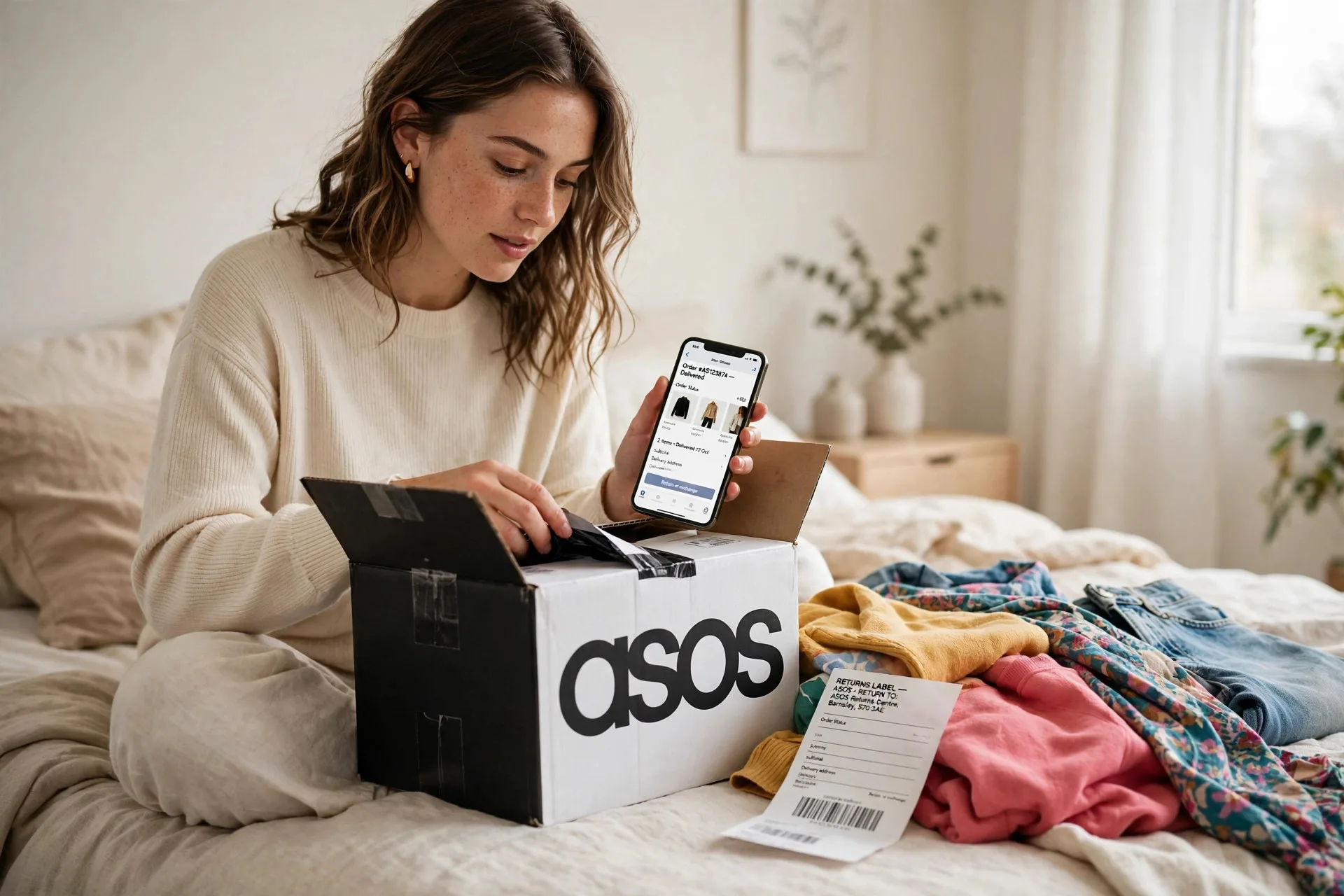
Posh Protect is Poshmark's buyer protection, and it has one number you must remember: 72 hours. After delivery, you have three days to accept the item or open a case. If you do nothing, Poshmark automatically releases the payment to the seller and the case window closes.
Posh Protect covers purchases made through Poshmark checkout when an item never arrives or is not as described — including items that arrive damaged, counterfeit, incorrect, or significantly different from the listing. If a claim is approved, Poshmark issues a return label, you have about five days to send the item back, and the refund follows once the seller receives it.
What it does not cover is just as important. Posh Protect generally does not cover a change of mind or a clothing item that does not fit. Poshmark also offers optional Worry-Free Returns on some eligible orders, which can extend return options for issues such as fit or buyer's remorse — but that is an add-on on selected orders, not a general right to return.
The practical rule is therefore brutal and simple: the moment a parcel arrives, open it, compare it with the listing photos, and check every detail the same day. Do not leave it in the box for the weekend. Once you accept the order, or the 72 hours pass, you generally cannot open a return case under Posh Protect — and your card issuer will not be impressed if you waited a week to complain about a fake.
Posh Authenticate: What the $500 Luxury Check Really Covers
Yes, Poshmark authentication is a real service offered directly by the platform — but it only applies to a slice of listings. Posh Authenticate covers select luxury brands and categories priced at $500 or more, and eligible listings display an "Authentication Included" badge. Those items are checked by Poshmark's in-house team before they reach you.
That leaves a large gap in the middle. A designer bag listed at $300, a pair of sneakers at $180, or a "vintage" watch at $450 gets no platform authentication at all. Below the $500 threshold, authenticity depends on the seller's honesty and your own checks — photos of serial numbers, stitching, hardware, dust bags, and receipts.
If you are buying a luxury item under $500, treat it like any private sale: ask for close-up photos of every authenticity marker before you pay, compare them against the brand's known details, and walk away from any seller who refuses. And if the price is far below market for a luxury brand, treat that as a red flag on its own — scammers use too-good prices as bait to lure buyers into off-platform contact.
Poshmark Fees: What Buyers and Sellers Actually Pay
Poshmark makes its money from sellers, and the fee is steep by resale standards. On the US marketplace, sellers pay a flat $2.95 on sales under $15 and a 20% commission on sales of $15 or more. That fee funds the platform, the prepaid shipping label and the Posh Protect guarantee.
Buyers pay a flat $6.49 shipping fee on standard orders weighing up to 5 lb. Sellers are responsible for additional shipping costs on heavier packages. There is no separate buyer service fee at checkout — the shipping charge is the visible extra cost.
Why do the fees matter to you as a buyer? Because they explain two things you will see on the platform. First, sellers price higher than on fee-free marketplaces to cover the 20% cut, so a "deal" on Poshmark is not always a deal — compare the same item on eBay or Vinted before you buy. Second, the fee is exactly what scammers try to help you "avoid": anyone offering a discount to pay outside the app is offering to remove your only protection. The 20% is the price of the escrow system. Skipping it means skipping the safety net.
Why Trustpilot Says 1.2 Out of 5 (and the Apps Say 4.8)
Here is the contradiction every Poshmark shopper should understand before trusting either number. As of October 2026, Trustpilot rates poshmark.com 1.2 out of 5 from more than 5,000 reviews, with about 86% of reviewers giving one star and only 5% giving five. The complaints cluster around support, refunds, and listing accuracy. Yet Poshmark's mobile apps score 4.8 out of 5 on the Apple App Store and 4.5 out of 5 on Google Play.
Both numbers can be true at once. App-store ratings mostly reflect the app experience — browsing, listing, and the social features people enjoy. Trustpilot collects the people who had a problem and felt unheard: a refund refused after the 72-hour window, a counterfeit claim denied, a support reply that took days. And one-sided review sites skew negative for every large marketplace — our earlier checks found the same pattern on other platforms — but a 1.2 with 86% one-star reviews is still a warning that the dispute process, not the app, is where Poshmark lets people down.
There is no FTC enforcement action against Poshmark in the research available as of October 2026, but a privacy class action filed in August 2025 alleges the company tracked users without consent; as of early 2026 no settlement existed. The lesson is not "never use Poshmark" — it is "use it with your eyes open, and never let the 72-hour window pass while you are still deciding."
5 Poshmark Scams to Watch For in 2026
Scammers do operate on Poshmark, and almost every reported scam starts the same way: someone tries to pull you out of the app. A 2025 Norton survey found roughly 41% of US adults have encountered a scam on a social or peer-to-peer marketplace, rising to 60% among 18-to-24-year-olds — the exact age group driving resale growth. These are the five patterns to recognise:
1. The off-app payment request. The most common Poshmark scam. A "buyer" or "seller" asks you to email, text, or pay through Venmo, Zelle, Cash App or PayPal Friends & Family — often sweetened with a small discount or "I'll pay extra." Once you pay outside Poshmark checkout, you lose Posh Protect, tracking, and the dispute system entirely. Never accept off-platform payment, and never ship an item because someone says they paid elsewhere.
2. Fake verification and external links. Messages claiming you must "verify your account to receive payment," "download your shipping label here," or "your funds are on hold until you verify something." Poshmark does not send external links for payments or labels. Every legitimate sale includes a prepaid label inside the app — no label, no sale.
3. Fake payment confirmation emails. Scammers send emails that look like they came from Poshmark, claiming your item sold, payment is pending, and you need to ship now. They can include photos of your item and closely resemble real sale emails. The rule is simple: if the sale does not appear in your Poshmark account, it is not real.
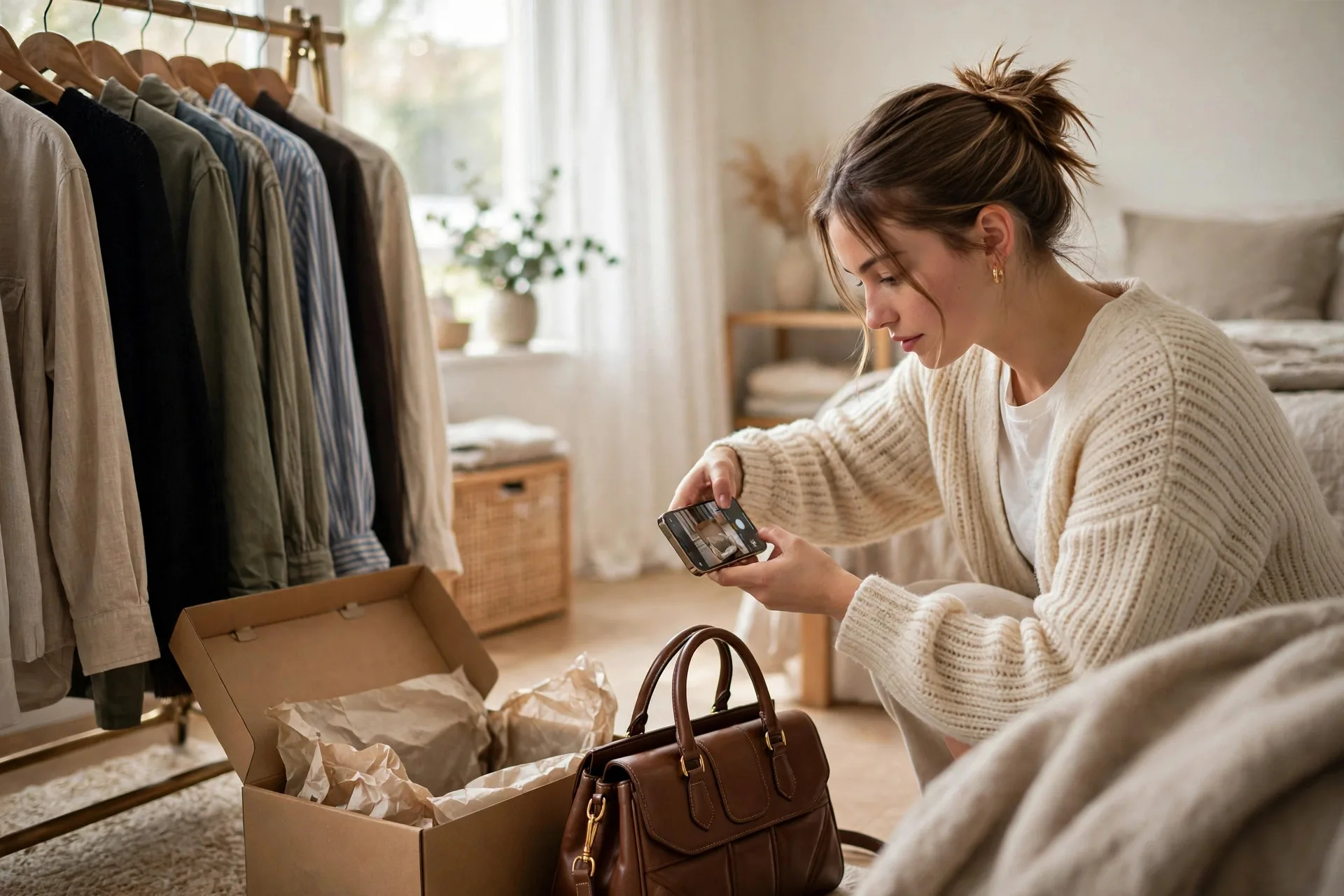
4. Counterfeit items and item swaps. A seller lists a fake designer item with stolen photos, or a buyer returns a different, cheaper item — or an empty box — and claims that is what you sent. Photograph the item, its packaging, and the drop-off receipt before and after shipping, and keep the tracking proof.
5. Too-good price bait and fake support impersonation. A high-value item listed far below market price to lure you into off-app contact, or a message pretending to be Poshmark support claiming your account is suspended, with a link to a fake login page designed to steal your password. Be suspicious of any unexpected request for credentials, payment details or identity documents, especially if it arrives by email or text instead of inside the official app.
How to Vet a Poshmark Seller Before You Buy
Poshmark gives you the tools to check a seller — use all of them before you pay:
- Read the seller's reviews first, not the listing. Look for recent reviews, not just the star count. A seller with dozens of five-star reviews from the last few months is a different risk from one with three reviews from two years ago. If the listing has comments praising the seller, check whether those accounts look real.
- Demand real photos, not stock images. Ask for close-ups of labels, stitching, hardware, soles, and any flaws the listing mentions. A seller who only uses brand photos or refuses extra pictures is hiding something. Reverse-image-search any photo that looks too polished.
- Check closet activity. A seller who shares, lists, and responds regularly is an active account. A closet with one listing, no profile photo, and no activity is a higher-risk first purchase.
- Compare the price against the market. Search the same item on eBay and Vinted. If the Poshmark price is 70% below every comparable listing, the "deal" is the trap.
- Paste the review text into our fake review checker. Seller reviews on Poshmark can be faked or bought like anywhere else. If a seller's reviews read like copy-paste praise with no specifics, paste the review text into our fake review checker and see what the patterns say before you trust them.
- Keep everything in the app. Payment, messages, and shipping all stay inside Poshmark. The second anyone asks for your email address, phone number, or an outside payment app, the deal is over.
Poshmark vs Vinted, Depop and eBay
Poshmark is not the cheapest or the most forgiving resale app — it is the one with the strongest escrow habit and the strictest return window. Vinted charges buyers a small protection fee (usually 5% plus €0.70) and gives a two-calendar-day window after delivery to report problems, with no seller fees; Depop charges sellers no commission but takes 2.9% plus £0.30 or 3.3% plus $0.45 in payment processing and gives buyers 30 days of Depop Protection on in-app payments. eBay's Money Back Guarantee gives buyers 30 days from delivery and covers the purchase price plus original shipping. We compared Amazon and eBay buyer protection in depth here: /blog/amazon-vs-ebay-buyer-protection-compared-2026.
The trade-off is clear. Poshmark's 72-hour window is the shortest of the four, and its 20% seller fee is the highest. What you get in return is a platform that holds the money until you accept the item, provides the shipping label, and authenticates luxury items over $500. If you want maximum buyer protection and time, eBay or Depop are more forgiving. If you want the biggest US secondhand fashion closet and you are willing to inspect fast, Poshmark is a legitimate place to shop.
What European Shoppers Need to Know
Because Poshmark has no UK or EU marketplace, most European readers will meet it in one of two ways: buying from a US seller who ships internationally, or using a parcel-forwarding service. Both routes add cost and risk. The EU ended its €150 duty exemption on 1 July 2026, replacing it with a flat €3 duty per item category, and the US ended its de minimis exemption for all countries on 29 August 2025 — so a "cheap" US purchase can arrive with duties, VAT and handling fees that erase the saving. If you are in Europe, check the total landed cost before you buy, and remember that Posh Protect cases are harder to run across borders and time zones.
For most European shoppers, the safer move is to use the platforms built for your market — Vinted for everyday fashion, Depop for streetwear and vintage — and to run the same seller checks before every purchase. Our guide to verifying any seller before you pay applies on every platform: /blog/how-to-verify-a-seller-before-you-pay-2026.
FAQ
Is Poshmark legit or a scam?
Poshmark is a legitimate marketplace, not a scam. It has operated since 2011, listed on the Nasdaq in 2021, and has been owned by Naver since a $1.2 billion acquisition closed in January 2023. Scammers do operate on it, mostly by moving buyers and sellers off the app, so pay only through Poshmark checkout.
Is Poshmark safe to buy from?
Yes, when you pay through Poshmark and inspect the item on arrival. Posh Protect covers eligible in-app purchases if an item never arrives or is not as described, but you have only 72 hours after delivery to open a case. Check the seller's reviews, ask for real photos, and never pay outside the app.
Can you return something on Poshmark?
Generally no, not for fit or change of mind. You can open a Posh Protect case within 72 hours of delivery if the item is damaged, counterfeit, incorrect, or significantly different from the listing. Optional Worry-Free Returns on some eligible orders can extend return options for fit or buyer's remorse.
Does Poshmark authenticate luxury items?
Posh Authenticate applies to select luxury brands and categories priced at $500 or more, and eligible listings show an "Authentication Included" badge. Cheaper designer items are not authenticated by the platform, so verify them yourself before you pay.
What are the most common Poshmark scams?
Off-app payment requests (Zelle, Venmo, Cash App), fake verification links, fake payment confirmation emails, counterfeit listings and item swaps, and too-good-to-be-true prices used as bait. Every one of them starts with someone trying to move you off the platform — refuse, report the account, and keep the transaction inside Poshmark.
The Bottom Line
Poshmark is a real, long-running marketplace with a real escrow system — and a dispute window so short that it punishes slow buyers. Buy with the 72-hour clock in mind: vet the seller, compare the price, pay inside the app, and inspect the parcel the day it arrives. If a seller's reviews look too perfect to be true, paste the review text into our fake review checker before you trust them — and if a website or seller ever feels off, run it through our website checker at /website-checker first. The next step is yours: before your next Poshmark purchase, check the seller with the steps above — and if you have already paid a scam website, follow the recovery steps in our guide at /blog/paid-a-scam-website-9-steps-to-take.
Sources: NordVPN, "Is Poshmark Legit?" (updated October 2026); Flowlister, "Is Poshmark Legit? Safety, Fees and Scams (2026 Guide)" (updated 23 September 2026); AliDropShip, "Is Poshmark Legit Or A Scam? Buyer And Seller Review 2026" (October 2026); Vendoo blog, "Is Poshmark Legit & Safe? A Guide to Poshmark Scams" (2026); Norton 2025 marketplace scam survey, via Guard.io (13 October 2026); Poshmark Google Play listing (updated 1 May 2026); SEC Form 8-K, Poshmark–Naver merger (5 January 2023); DHL 2026 E-Commerce Trends Report, via Kurums (November 2026).