By Fake Review Detector
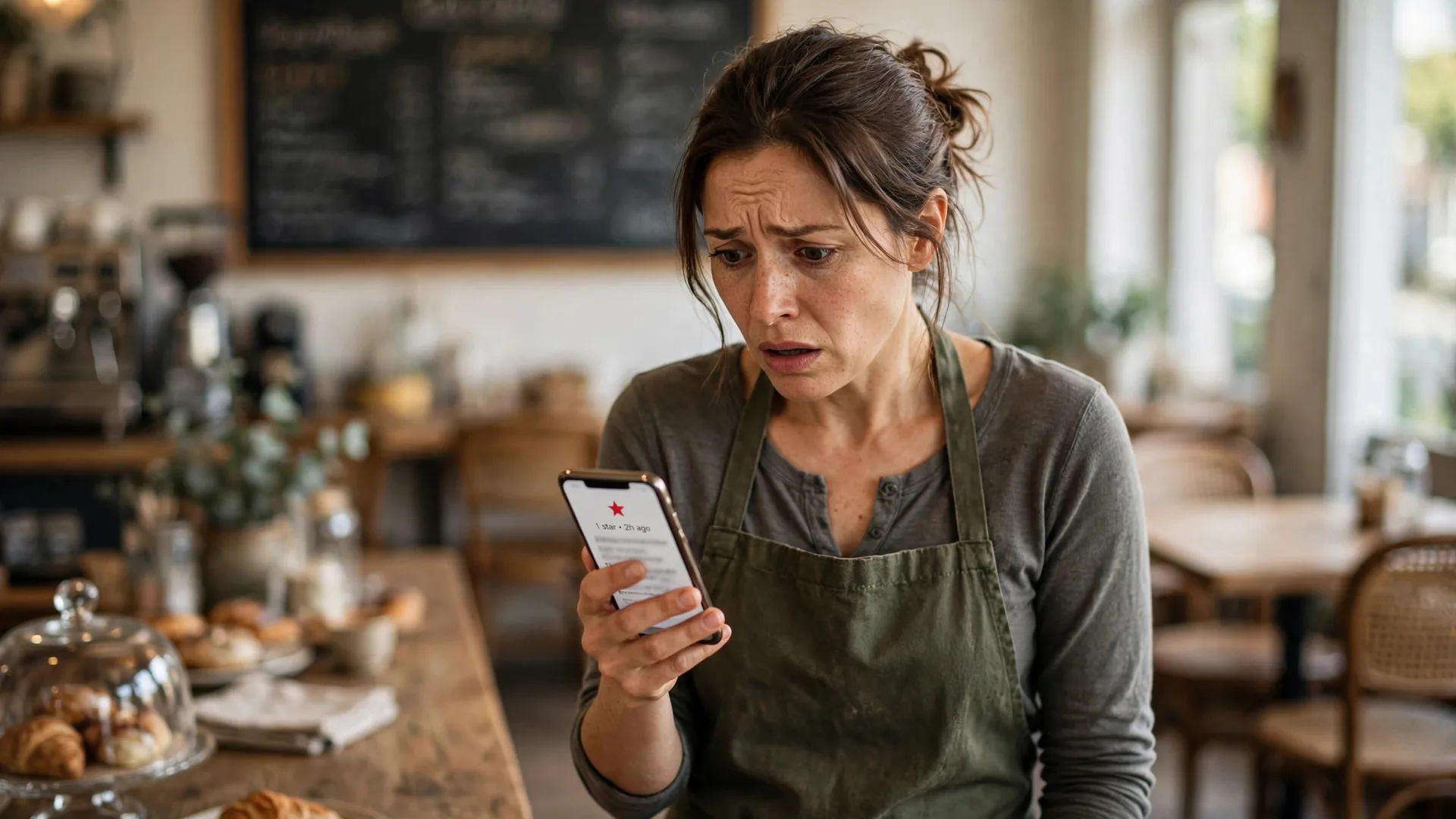
Review extortion is when a rival — or someone paid by one — posts fake 1-star reviews about your business to damage your rating, and sometimes follows up with a demand: pay money, or the bad reviews keep coming. It is not a disgruntled customer, and in the US, UK and EU it is illegal. Here is how to spot it and fight back.
What Review Extortion Actually Is
Review extortion takes two forms, and both are attacks, not feedback. The first is sabotage: a competing business pays a review farm, a gig worker, or a group of fake accounts to flood your Google, TripAdvisor, Yelp or Trustpilot listing with 1-star reviews. The goal is simple — drag your rating down so customers pick them instead. The second is extortion in the literal sense: the bad reviews arrive, and then so does a message. An anonymous email, a WhatsApp text, a direct message on your business page: pay a fee and the reviews stop, or pay and the reviews get "removed". Pay, and the demands almost always come back for more.
This is different from a genuine complaint, and different from review bombing. A real unhappy customer writes about something specific — a dish, a date, a named member of staff. Review bombing is a mass pile-on, usually public and usually driven by protest or outrage over something your business said or did. We explain that pattern in our guide to review bombing (https://fakereviewdetector.org/blog/review-bombing-explained-2026). Review extortion is quieter and more targeted: the reviewers were never your customers, the reviews say almost nothing specific, and the timing serves one business — yours falling, a rival's rising.
If you run a restaurant, a dental clinic, a salon, a hotel or any local business where a 4.8 becomes a 4.2 overnight, the damage is real money. Shoppers in the US and Europe check ratings before they book, and a sudden cluster of 1-star reviews at the top of your listing does its damage before anyone reads the details.
How the Playbook Works
Step one is picking the target. Extortionists and rival operators go after businesses where ratings decide who gets the booking: restaurants, hotels, clinics, tradespeople, salons. A business sitting at 4.7 stars with a rival at 4.3 is worth more as a target than a business nobody reads about.
Step two is buying the reviews. The reviews are posted by fake accounts, often created in a batch, sometimes by workers paid a few dollars per review on gig platforms. They arrive in a burst — five, ten, twenty 1-star reviews in a few days, sometimes a few hours — after months of a normal, steady trickle. The text is vague, because the writer has never been to your business: "worst place ever", "terrible service, avoid", "scam, do not go here". Sometimes the same sentence shows up under several different names.
Step three is making contact. In the pure sabotage version, there is no contact — the damage is the point. In the extortion version, a message follows the flood: pay us, or more reviews are coming. The payment is usually demanded by bank transfer, gift card or crypto — payment methods that cannot be reversed or traced easily. That alone tells you everything about who you are dealing with.
Step four is escalation or disappearance. If you pay, the reviews sometimes pause, and then a new demand arrives. Extortionists do not close accounts; they farm them. If you refuse, a second wave may follow to punish you. Either way, paying is the worst move you can make, for reasons we cover below.
7 Signs a Bad Review Came From a Rival, Not a Customer
One bad review proves nothing. A pattern proves a lot. Check the suspicious reviews against these seven signs:
1. A sudden burst. Several 1-star reviews land within hours or days, after months of a normal pattern. Genuine dissatisfaction does not arrive in a coordinated wave.
2. The reviewers were never customers. Check your booking system, your order records, your till. If you cannot match the name, the date or the described visit to any real transaction, that is the strongest single signal.
3. Vague, generic text. No dish, no room number, no appointment date, no product name — just anger. Real customers complain about something specific. Fake reviewers cannot, because they were never there.
4. Copy-paste wording. The same phrases, the same misspellings, the same structure across several reviews. Run a suspicious review through a search: if the same sentence appears under other businesses, it was bought.
5. Empty reviewer profiles. One review only, an account created days ago, no photo, no history. A real local guide or regular reviewer leaves a trail.
6. Timing that follows a trigger. The flood starts the week you overtook a rival in the search results, the month a competitor opened across the street, or the day after you won a local award.
7. A demand arrives. An email or message offering to "fix" the reviews for money is the confession. No legitimate reputation company threatens you first and sells you the cure second.
Three or more of these signs together should be treated as a bought-review attack until proven otherwise. And if you are a shopper reading reviews rather than a business owner, the same test works in reverse: paste the review text into our fake review checker before you trust a 1-star pile-on.
What the Law Says in the US, UK and EU
This is not a grey area. Buying or selling fake reviews is now banned on both sides of the Atlantic, and the rules name exactly this behaviour.
In the United States, the Federal Trade Commission's Rule on the Use of Consumer Reviews and Testimonials took effect on 21 October 2024. It bans businesses from buying or selling fake reviews, including reviews written by someone with no experience of the product or service — which is precisely what a rival's bought 1-star reviews are. The FTC can seek civil penalties against businesses that break the rule.
In the European Union, the Omnibus Directive (Directive (EU) 2019/2161) has banned fake reviews since 28 May 2022. It forbids posting reviews by people who have not used the product, and it requires online marketplaces and platforms to explain how they verify that reviews come from real consumers. A rival buying fake reviews about your business is breaking EU consumer law, and so is any platform that knowingly hosts them without action.
In the United Kingdom, the fake-review rules in the Digital Markets, Competition and Consumers Act took effect in April 2025. They ban businesses from commissioning fake reviews and require platforms to take reasonable steps to remove them. The Competition and Markets Authority has made fake reviews an enforcement priority.
On top of all that, the demand for money is a separate offence. Threatening to keep posting fake reviews unless you pay is extortion, which is a criminal matter in the US, the UK and across the EU. That is why you should never pay — and why you should keep every message as evidence.
What to Do in the First 24 Hours
Do not reply to the reviews in anger, and do not pay anyone. Work through these steps in order:
First, preserve the evidence. Screenshot every suspicious review with the reviewer name, the date and the full text visible. Screenshot the demand message too — email, WhatsApp, direct message, all of it. Save the originals; screenshots are your record if accounts get deleted later.
Second, check your own records. For each suspicious reviewer, check bookings, orders, invoices and your appointment book. Write down which reviewers you cannot match to any real customer. Platforms take a report far more seriously when you can say "we have no record of this person".
Third, report every fake review. On Google, flag the review from your Business Profile and select "fake engagement" or "conflict of interest" as the reason. TripAdvisor, Yelp and Trustpilot all have reporting flows for reviews from people who were never customers. Report each review individually — bulk complaints get slower answers.
Fourth, reply publicly, once, calmly. A short response to the genuine-looking ones — "We have no record of your visit; please contact us so we can check" — tells real shoppers you are paying attention, without feeding the attacker.
Fifth, tell your real customers. Ask happy customers to leave honest reviews. Never offer discounts or freebies for reviews — that breaks the same rules the attacker is breaking — but a simple ask at the till or in a follow-up email is legal everywhere and is the fastest way to dilute a fake flood with genuine ratings.
Sixth, if a payment was demanded, report it. In the US, report to the FTC at ReportFraud.ftc.gov. In the UK, report to the Competition and Markets Authority or Trading Standards. In the EU, report to your national consumer authority. Keep the case reference number.
How to Get the Fake Reviews Removed
Reporting is the first step, but removal takes persistence. Here is how each platform handles it:
Google Business Profile is the most important listing for most local businesses. After flagging a review, check the status in your profile's review management section. If the flag is rejected, use Google's legal removal request and cite the conflict-of-interest policy — a review posted by or on behalf of a competitor violates it. Include your evidence: no matching customer record, the burst timing, and the extortion message if you have one. We walk through the full process in our guide to removing fake Google reviews (https://fakereviewdetector.org/blog/how-to-remove-fake-google-reviews-2026).
TripAdvisor has a dedicated fraud reporting route for reviews from people who were never guests. Its moderation team checks reviewer history and IP patterns, so a batch of new accounts posting in the same week is exactly what its systems look for.
Yelp and Trustpilot both allow businesses to flag reviews that violate their policies on fake content and conflicts of interest. Trustpilot is stricter than most about evidence, so attach your records.
If the platform refuses and the reviews are clearly bought, escalate. A short, documented complaint to the regulator — the FTC in the US, the CMA in the UK, your national consumer authority in the EU — often moves a case that a first report did not. Keep every reference number and date.
Expect removal to take days to weeks, not hours. Platforms process millions of reports, and bought-review cases need a human look. While you wait, the steady flow of genuine reviews from step five is doing the real repair work.
How to Protect Your Listing Going Forward
You cannot stop a rival from trying, but you can make your listing hard to damage:
Build a steady flow of genuine reviews. A business with two new honest reviews a week absorbs a fake burst far better than a business with three reviews a year. Make asking part of the routine, not a crisis response.
Turn on review alerts. Google Business Profile, TripAdvisor and Trustpilot all notify you of new reviews. A burst caught on day one is a small problem; a burst found a month later is a reputation problem.
Keep records that prove who your customers are. A booking system or order history is the evidence that gets fake reviews removed. If your records are paper-only, that is the week to digitise them.
Brief your staff. Everyone who answers the phone or the inbox should know: never pay anyone who offers to remove reviews, and forward any threatening message to you immediately.
And as a shopper, remember the other side of this: the 1-star pile-on you are reading might be a rival's work, not a warning. Before you write off a business — or a product — paste the review text into our fake review checker and test the suspicious reviews first.
Frequently Asked Questions
Is review extortion illegal?
Yes. Buying fake reviews is banned in the US under the FTC's Fake Review Rule (effective 21 October 2024), in the EU under the Omnibus Directive (in force since 28 May 2022), and in the UK under the Digital Markets, Competition and Consumers Act (fake-review rules in force since April 2025). Demanding money to stop the reviews is extortion, a criminal offence in the US, UK and EU.
Should I pay someone who offers to remove bad reviews?
No. Paying funds the scam and the demands almost always repeat. Paying for review removal can also breach platform rules and, in some cases, consumer law. Report the reviews and the demand instead, and keep every message as evidence.
Can Google tell a fake review from a real one?
Sometimes. Google removes reviews that violate its policies on fake engagement and conflicts of interest, but its systems miss plenty. A report backed by evidence — no matching customer record, burst timing, empty reviewer profiles — is far more likely to succeed than a bare flag.
How fast can fake reviews be removed?
Usually days to weeks. Simple flags are processed fastest; cases that need a human reviewer or a legal removal request take longer. Escalating to the regulator can help when a platform refuses a clear-cut case.
How can I tell if a review about my business is fake?
Check the seven signs above: a sudden burst, reviewers you cannot match to any real customer, vague copy-paste text, and empty profiles. For a fast test, paste the review text into our fake review checker — it analyses the wording for the patterns fake reviews share.
Your Next Step
Start with the evidence. Screenshot the suspicious reviews and any demand message today, check them against your customer records, and report each fake review on the platform where it appears. Then test the suspicious ones — paste the review text into our fake review checker — and follow our guide to removing fake Google reviews (https://fakereviewdetector.org/blog/how-to-remove-fake-google-reviews-2026) to get them taken down. A rival can buy a burst of 1-star reviews, but they cannot buy your records, your real customers, or the law being on your side.
Explore the evidence behind your next question.
Start a website check